Smoke Control System Testing & Coordination in Vancouver, BC
Protect evacuation routes, support firefighter access, and keep your building compliant with professional smoke control system testing and documentation support from EWF.
Coordinate the right people before testing
For your quote: Include the property address, building type, preferred timing and any previous smoke control report or known deficiencies. Mention available drawings or operating sequences.
Access and coordination: Identify the building contact and the mechanical, electrical, elevator or other contractors already involved. Testing may need access to plant rooms, rooftops and occupied areas.
Reporting and review: EWF supports testing, coordination and deficiency documentation. Where engineering review or certification is required, the appropriate qualified professional must be involved.
What We Test
Smoke control systems may include smoke exhaust fans, stairwell pressurization, elevator shaft pressurization, make-up air units, fire and smoke dampers, generator interfaces, elevator recall, and fire alarm system controls. EWF helps verify that these components and their activation sequences respond as intended.
Recent Smoke Control Testing Project
EWF recently supported a coordinated smoke control test requiring multiple trades on site — reviewing the fire alarm interface, verifying activation sequences, documenting observations, and identifying follow-up items for the property team.
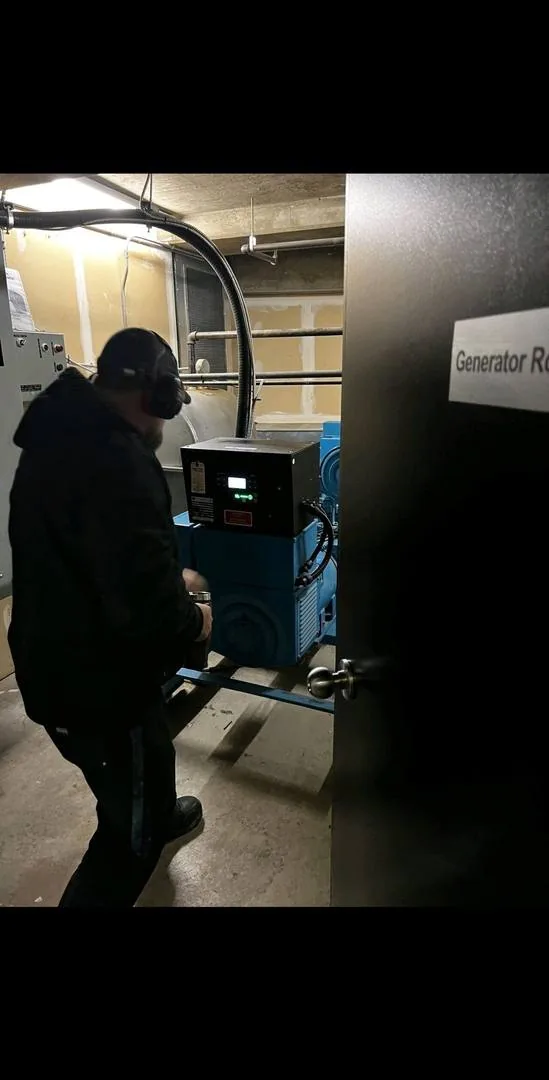
Generator interface testing and emergency power verification
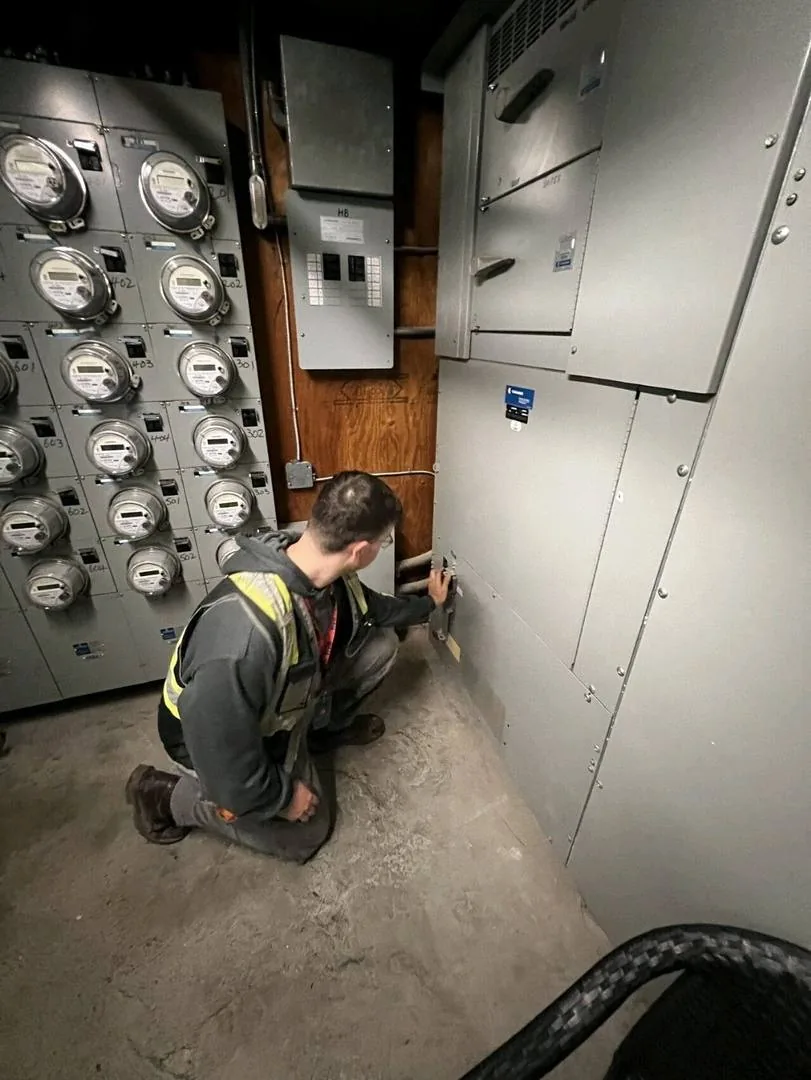
Electrical coordination and life safety interface review
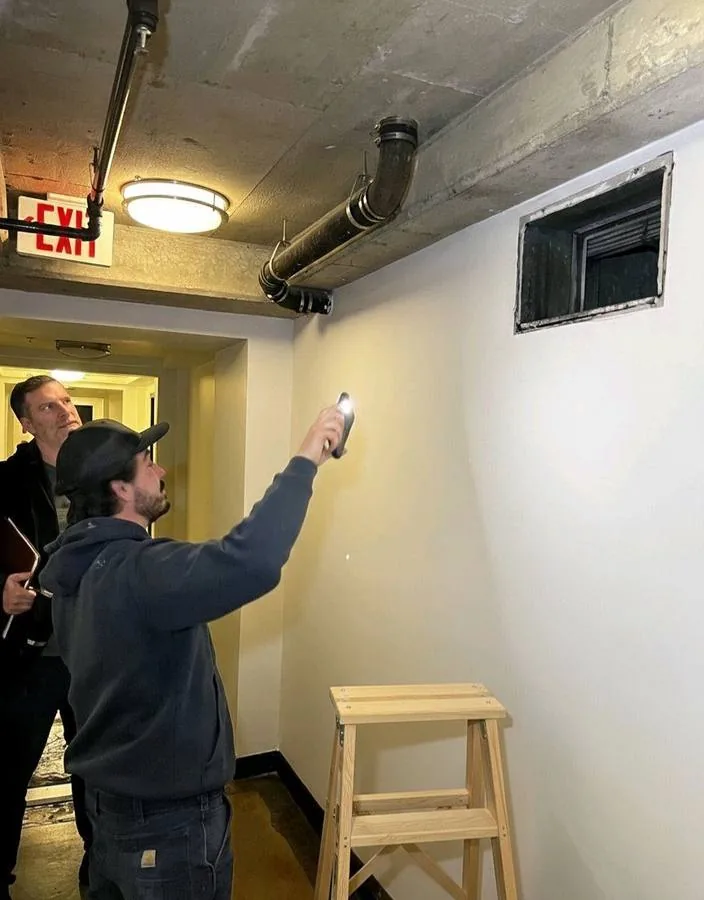
Smoke damper and corridor system inspection
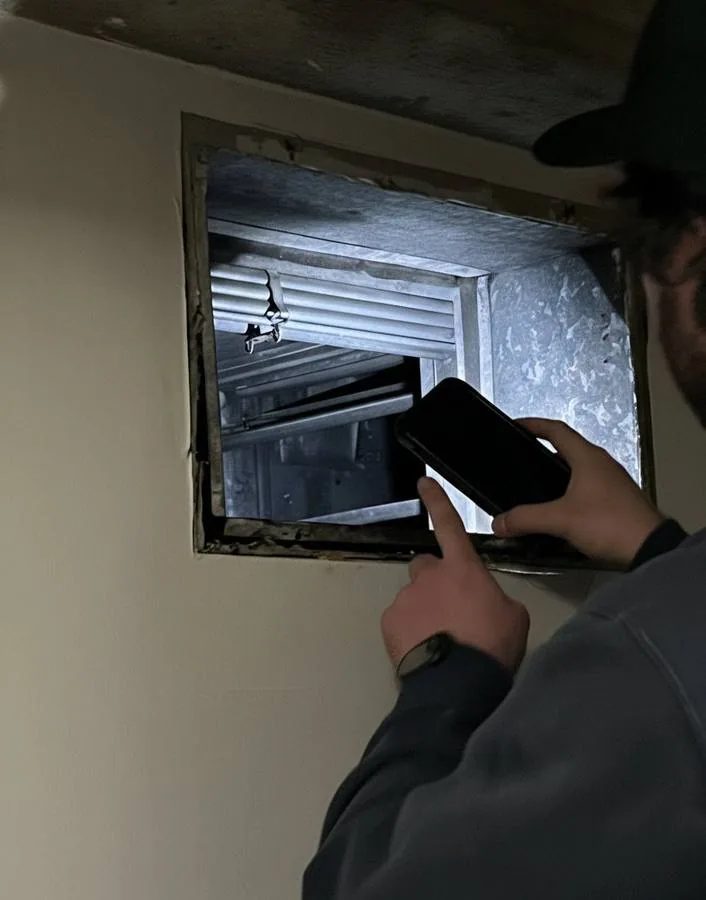
Detailed smoke damper and duct system inspection
Why Coordination Matters
Smoke can spread quickly through corridors, stairwells, elevator shafts, parkades, and mechanical openings. A properly operating smoke control system helps keep evacuation routes clearer, supports firefighter access, and reduces smoke migration between areas of the building.
These systems are often overlooked because a single activation sequence can involve fans, dampers, elevators, generator controls, pressurization equipment, and HVAC shutdown — all at once. If one part of that sequence fails, the system may not perform as intended during an emergency.
Testing is rarely handled by one trade alone. EWF coordinates the process — from access scheduling through deficiency documentation — so property managers know exactly what was tested and what follow-up is required.
EWF supports high-rise residential, strata, commercial, mixed-use, parkade, and institutional buildings throughout Vancouver and the Lower Mainland. Where engineering review or certification is required, EWF can coordinate with the appropriate qualified professional.
Our Process
Review System Type & Site Requirements
Review the smoke control design intent, site conditions, available documentation, and equipment involved.
Coordinate Access & Testing Sequence
Coordinate with building management, HVAC, electrical, elevator, generator, and other required trades where applicable.
Test System Interfaces & Operation
Test fire alarm interfaces, fans, dampers, controls, pressurization equipment, and related activation sequences.
Document Results & Follow-Up
Provide deficiency documentation, inspection notes, and follow-up recommendations — supporting BC Fire Code and AHJ recordkeeping obligations.
Frequently Asked Questions
Does EWF certify smoke control systems?
Why does smoke control testing require multiple trades?
Can EWF help with deficiencies found during testing?
Related Services
Need Smoke Control Testing for Your Building?
EWF provides professional fire protection inspection services throughout Vancouver and the Lower Mainland. Contact our team to schedule smoke control system testing, coordination, deficiency documentation, or follow-up support.