
Sprinkler System Testing & NFPA 25 Compliance in Vancouver, BC
5-Year internal inspections, PRV testing, flow tests, and deficiency documentation for strata, commercial, and parkade sprinkler systems throughout Vancouver and the Lower Mainland.
Plan your sprinkler service
Choose the work you need: Select a request below, or describe the issue in the enquiry form. Include the property address and any previous inspection report or outstanding deficiency list.
Access and timing: Mention sprinkler rooms, parkade access, tenant operating hours and known system issues. Confirm any isolation, water discharge and service interruption arrangements with EWF before work is scheduled.
Fire sprinkler systems require regular inspection and maintenance to remain reliable and code-compliant. Over time, internal corrosion, sediment buildup, and system changes can compromise performance — often without any visible sign until a flow test or flush reveals the problem.
EWF provides sprinkler inspection and testing services focused on confirming system reliability, identifying deficiencies, and supporting building owners and property managers with NFPA 25-aligned documentation.
All work performed in alignment with NFPA 25 and applicable CAN/ULC standards.
What We Test & Service
Sprinkler system maintenance spans multiple components and inspection frequencies. EWF helps verify system condition, identify deficiencies, and document findings in accordance with NFPA 25 requirements.
Why the 5-Year Internal Inspection Matters
A 5-year internal sprinkler inspection involves opening selected sections of sprinkler piping to check for corrosion, obstructions, or buildup that could affect system performance. In many buildings, each floor's wet sprinkler zone is considered a separate sprinkler system once it passes through its own control valve and flow switch.
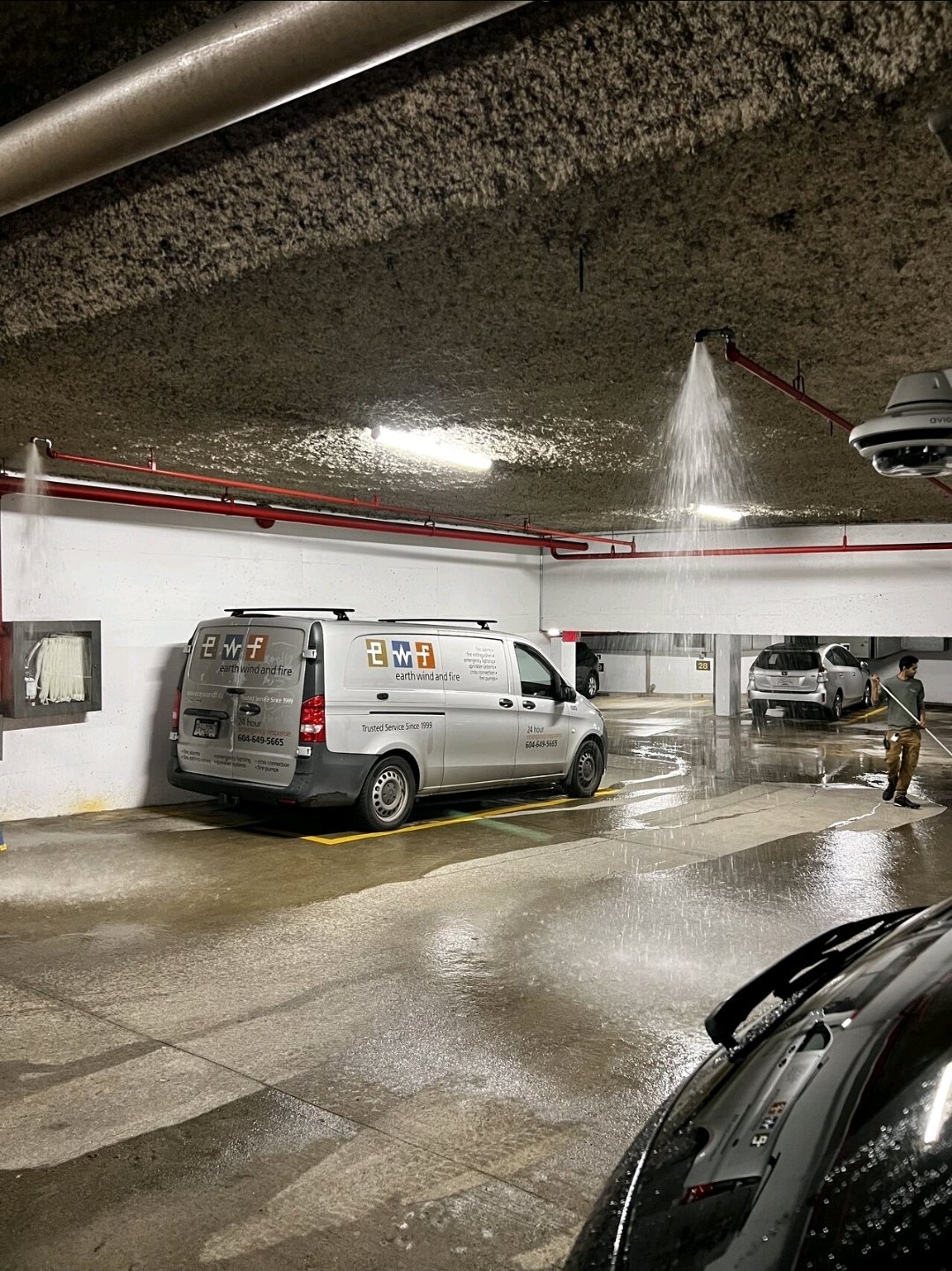
5-Year internal inspection in progress — flushing accumulated sediment from system deadlegs
This inspection does more than satisfy code requirements—it helps identify potential issues early, extends the life of the system, and may prevent costly repairs down the road. Qualified sprinkler fitters perform the work efficiently with minimal disruption, helping ensure your sprinkler system remains reliable and ready when needed.
EWF supports sprinkler inspection and testing in parkades, strata buildings, commercial properties, high-rise residential buildings, and mixed-use properties throughout Vancouver and the Lower Mainland.
Project Example: NFPA 25 PRV Compliance Upgrade
EWF recently completed a pressure reducing valve (PRV) inspection and compliance upgrade for a Vancouver property. Testing revealed the PRV was not maintaining design pressure — a common finding in aging systems that had not been serviced to NFPA 25 standards.
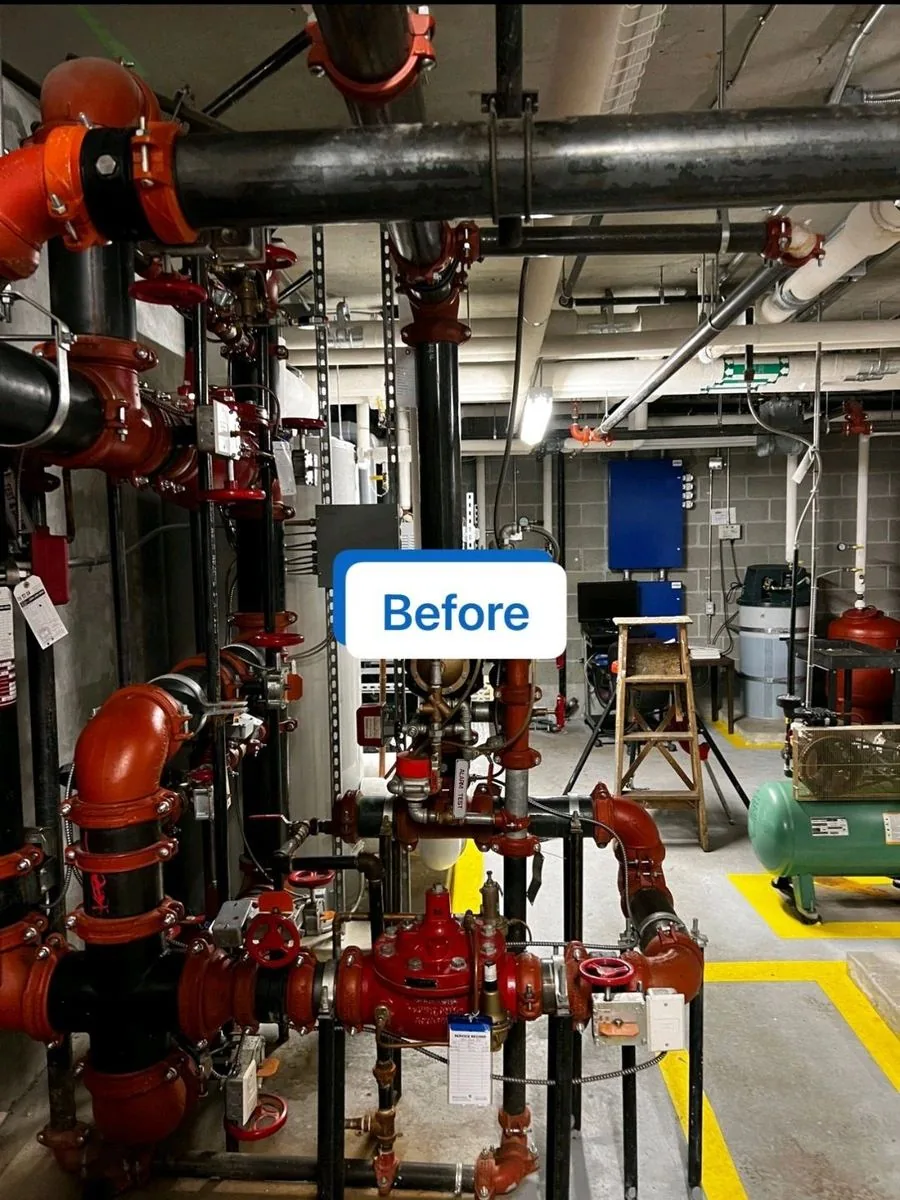
PRV assembly before compliance upgrade — failing pressure test
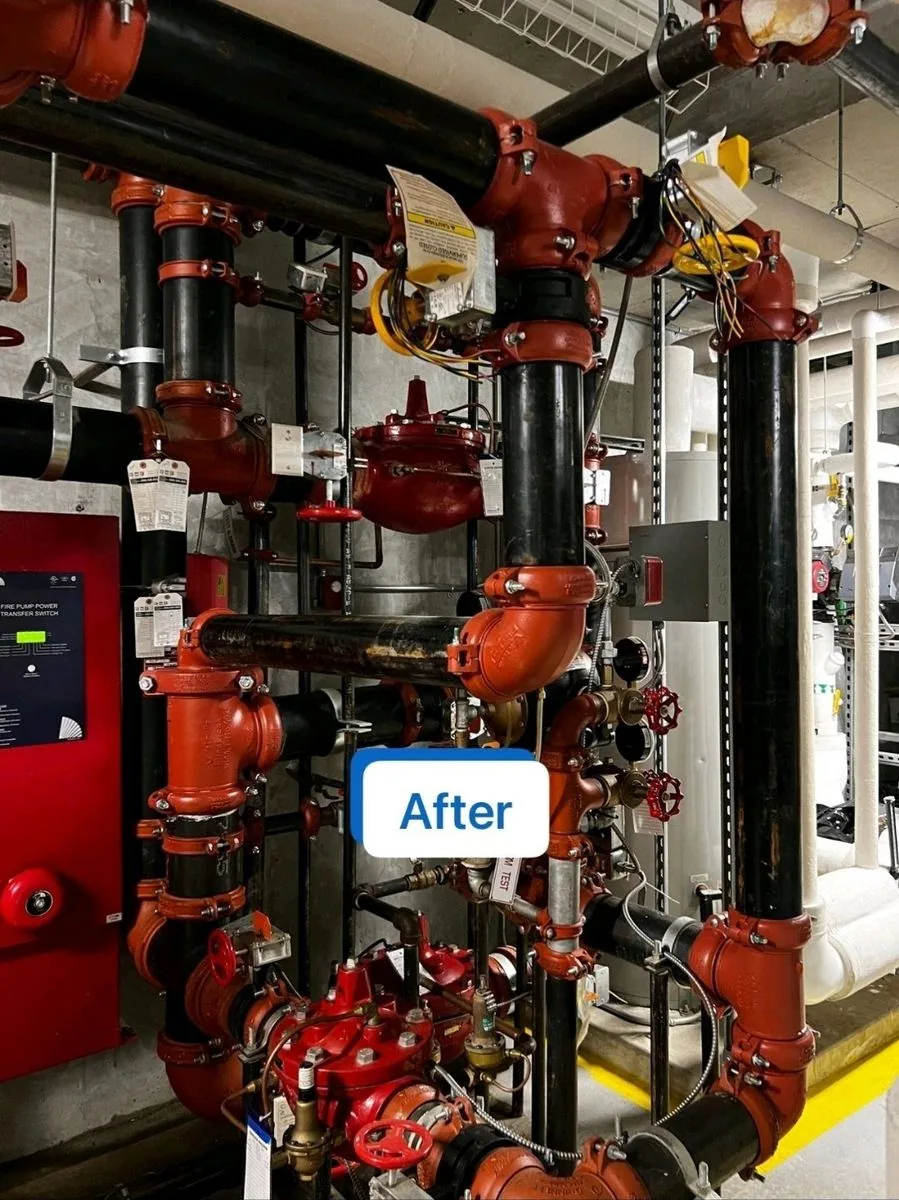
PRV assembly after upgrade — meeting NFPA 25 design pressure requirements
Our Process
Review System Type & Inspection History
Review system design, previous inspection records, and any known deficiencies to plan the scope of work.
Inspect & Test Components
Inspect sprinkler heads, control valves, alarm devices, and system components. Perform flow tests and PRV testing where required.
5-Year Internal Inspection Where Required
Open selected sections of piping for the 5-year internal inspection, flush to clear accumulated sediment from system deadlegs, and document system condition before and after.
Document Results & Follow-Up
Provide NFPA 25-aligned deficiency documentation, inspection notes, and recommendations for required repairs or further review.
Frequently Asked Questions
How often should fire sprinkler systems be inspected?
What is a 5-year internal inspection and why does it matter?
What is a PRV and why does it need testing?
Related Services
Need Sprinkler Testing or a 5-Year Internal Inspection?
EWF provides professional sprinkler inspection and testing services throughout Vancouver and the Lower Mainland. Contact our team to schedule testing, a 5-year internal inspection, PRV service, or deficiency documentation.